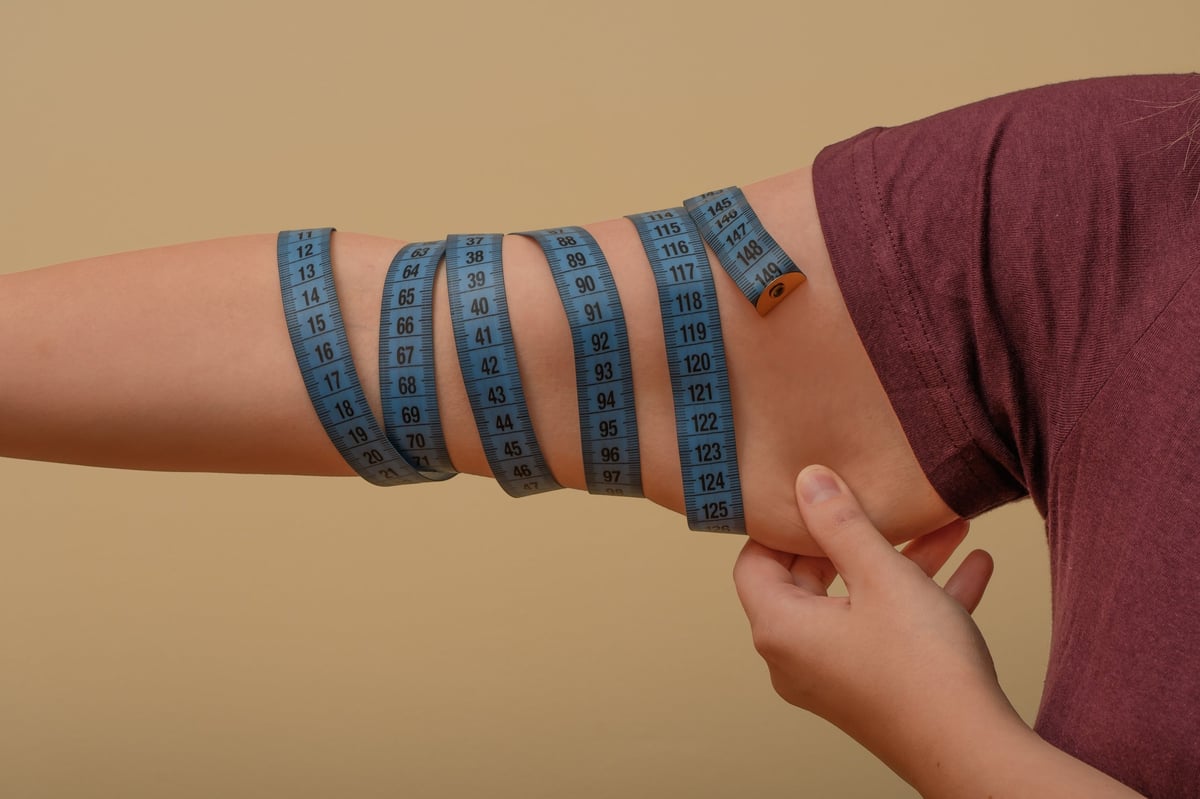
You did it. The weight is gone, or nearly there. But now you're looking
in the mirror and noticing something unexpected: loose skin, soft spots,
a lack of the definition you imagined. This is one of the most common,
and most underaddressed, phases of any weight loss journey.
The good news? What you're experiencing is completely normal. And it is
absolutely fixable.
Toning after weight loss isn't about losing more. It's about
rebuilding, swapping out the fat you've shed for lean,
metabolically active muscle that firms your body, lifts your skin,
accelerates your metabolism, and adds years of function and vitality to
your life. At HealthSpan, this is precisely what we mean by
transformation that lasts.
Learn about our body contouring services.
Why Your Body Looks Different After Weight Loss (And Why That's Not the
Whole Story)
When you lose weight, whether through a medical program, GLP-1 medications like semaglutide or tirzepatide, or lifestyle change, the fat beneath
your skin disappears. But the skin itself doesn't vanish with it.
Skin is an organ. It's made up of collagen and elastin fibres that
stretch to accommodate the body it covers. When fat is lost rapidly,
those fibres don't always spring back immediately. The result can be
loose, sagging skin, particularly around the abdomen, arms, thighs, and
neck.
At the same time, significant calorie restriction almost always causes
some degree of muscle loss alongside fat loss. Research consistently
finds that roughly 25% of weight lost during a calorie deficit comes
from lean tissue, not fat. On GLP-1 medications, where appetite
suppression can be dramatic, the aggressive reduction in food intake
means protein intake can slip without you noticing, and when protein
drops, muscle loss accelerates well beyond what a normal calorie deficit
would cause.
The combination, less fat, less muscle, looser skin is what creates that
"soft" or "deflated" appearance many people experience post-weight loss.
The solution is not more restriction. It',s strategic rebuilding.
The Science of Toning: What "Toned" Actually Means
"Toning" is not a scientific term, but what it describes is real: the
appearance of firm, defined muscle beneath healthy, elastic skin.
Biologically, this comes down to two things:
1. Muscle hypertrophy, growing lean muscle tissue to
fill the volume left by lost fat.
2. Improved skin elasticity, restoring the structural
integrity of the skin's collagen and elastin network.
A groundbreaking 2023 study published in
Scientific Reports found that resistance training can
rejuvenate aging skin by improving skin elasticity and increasing dermal
thickness. The study revealed that resistance training reduces
circulating inflammatory factors that contribute to skin aging and
enhances the dermal extracellular matrix, the skin's support structure.
In other words, lifting weights doesn't just build muscle. It actively
improves the quality and firmness of your skin from within.
Step One: Make Strength Training Your Priority
If there is one non-negotiable in the toning phase, this is it.
After you lose weight, your skin is loose because the fat underneath it
has disappeared. By building muscle mass, you can replace the missing
fat with muscle and fill the skin back out, alleviating the loose,
sagging appearance. Cardio, while excellent for heart health and calorie
burn, does not significantly contribute to muscle mass. Strength
training does.
The Physical Activity Guidelines for Americans recommend doing strength
training at least twice a week. For most people in a toning phase, three
to four sessions per week will produce the best results.
What to focus on:
-
Compound movements first. Exercises like squats,
deadlifts, bench press, rows, and overhead press recruit multiple
muscle groups simultaneously.
-
Progressive overload. Your muscles adapt quickly. To
keep growing, you need to consistently increase the challenge.
-
Target the areas that concern you. Arms, core,
glutes, and thighs are the most common post-weight loss trouble zones.
Aim for three to four strength training sessions per week, with rest
days in between.
Step Two: Prioritise Protein, More Than You Think You Need
Muscle is built from protein. Without adequate protein, no amount of
training will produce meaningful results, and after significant weight
loss, your protein needs are higher than average.
For individuals actively losing weight or in the toning phase following
weight loss, many experts recommend
1.2 to 1.6 grams of protein per kilogram of body weight per
day
, significantly higher than the general recommended dietary allowance of
0.8 g/kg/day.
For a person weighing 80 kg (176 lbs), that means targeting
96–128 grams of protein daily.
Best protein sources for the toning phase:
- Lean meats: chicken breast, turkey, lean beef, white fish
- Eggs and egg whites
- Greek yoghurt and cottage cheese
- Legumes: lentils, chickpeas, edamame
-
Protein shakes (whey or plant-based), particularly useful if GLP-1
medications have reduced your appetite
Step Three: Nourish Your Skin from the Inside Out
Building muscle fills the space left by fat. But improving the skin
itself requires targeted nutrition.
Collagen and vitamin C work together to support your
skin's structural fibres. Collagen peptide supplements have become one
of the most popular evidence-backed tools for improving skin elasticity
post-weight loss.
Hydration matters more than most people realise. Aim to
drink at least eight to ten glasses of water daily.
Zinc, vitamin E, and omega-3 fatty acids all support
skin repair and reduce inflammation. Find them in fatty fish, nuts,
seeds, avocado, and dark leafy greens.
Step Four: Support Your Skin from the Outside
While no topical cream will eliminate loose skin, consistent skincare
can meaningfully improve texture, tone, and elasticity over time.
Look for products containing:
- Retinol, stimulates collagen production
- Hyaluronic acid, draws moisture into the skin
-
Glycerin and ceramides, strengthen the skin barrier
- Caffeine, can temporarily tighten skin
Step Five: Be Patient with the Process
Give your skin at least 12 to 24 months before drawing conclusions about
how much it will tighten. Skin is a living organ that responds slowly to
change.
It's also worth knowing that what appears to be loose skin is sometimes
a thin layer of remaining subcutaneous fat. As body composition
continues to improve through training and nutrition, this layer reduces,
and skin can appear significantly firmer even without surgery.
A Note for Post-GLP-1 Patients
If you've recently completed a course of semaglutide, tirzepatide, or
another GLP-1 medication, toning is not just about aesthetics, it's
about protecting your long-term health.
Losing muscle can lower metabolic rate and physical strength. Strategies
like resistance training and high-quality protein intake are essential
to maintain muscle during and after GLP-1 therapy.
Lipo Laser or EmSlim Non-Surgical Treatments
For some people, particularly after large amounts of weight loss,
lifestyle measures alone may not fully address skin laxity. There are a
few options:
-
Radiofrequency treatments (such as
Morpheus8), stimulate collagen production
-
Ultrasound therapy, delivers focused energy
to deeper skin layers
-
Electromagnetic muscle stimulation, improves muscle
tone and firmness
-
Body contouring surgery, for significant, persistent
loose skin
Your Toning Timeline: What to Expect
| Timeframe |
What's Happening |
| Weeks 1–4 |
Nervous system adapts to training; strength increases before
visible muscle change
|
| Months 1–3 |
Early muscle growth begins; energy and strength noticeably
improve
|
| Months 3–6 |
Visible changes in body composition; skin begins to respond
|
| Months 6–12 |
Meaningful improvements in muscle definition, skin tone, and
firmness
|
| 12–24 months |
Full skin adaptation; maximum benefit from consistent training
and nutrition
|
Frequently Asked Questions
Can I tone without going to a gym?
Yes. Bodyweight exercises, push-ups, squats, lunges, glute bridges, can
produce real results, especially in the early stages.
Will cardio help me tone?
Cardio supports heart health and overall calorie balance, but it does
not build muscle in the way strength training does.
How do I know if I'm losing muscle instead of fat?
Body composition measurements (DEXA scan, bioelectrical impedance) are
far more informative than the scale alone.
Is loose skin permanent?
Not necessarily. For many people, skin will improve significantly over
12–24 months with consistent training and nutrition.
Ready to Start Your Toning Phase?
At HealthSpan Weight Loss & Anti-Aging, we don't believe
transformation ends when the weight comes off. That's just the
beginning of the next chapter.
Book a Consultation
Medical Disclaimer
This article is for informational purposes only and does not
constitute personalised medical advice. Always consult a qualified
health professional before commencing a new exercise or nutrition
program. Individual results may vary.